Frequently Asked Questions
The most-asked questions about modernist & contemporary pioneers.
What does the term 'modernist & contemporary pioneers' actually refer to?
It is a broad umbrella label for the artists, writers, composers, and architects who broke from 19th-century conventions and reshaped how we create and experience culture, roughly spanning the early 1900s through today. The phrase groups together figures like Picasso, Woolf, Stravinsky, and Duchamp alongside later innovators who kept pushing formal and conceptual boundaries.
Who are the most frequently cited central figures across the field?
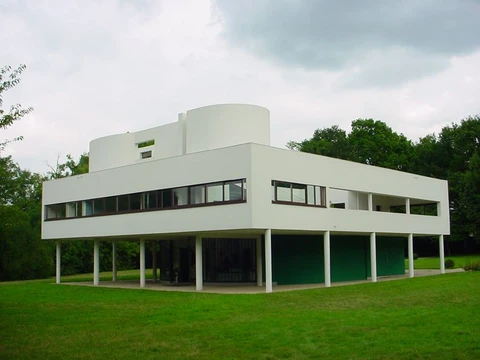
A shortlist that appears in nearly every survey includes Pablo Picasso, Marcel Duchamp, Virginia Woolf, James Joyce, Igor Stravinsky, Le Corbusier, and, for the contemporary wing, Andy Warhol and Marina Abramović. Each is credited with a specific rupture—cubism, readymades, stream-of-consciousness prose, atonal harmony, functionalist architecture, and performance art, respectively.
Where should a complete beginner start if they want to understand the movement?
Most guides suggest beginning with a single accessible work—say, Picasso's *Les Demoiselles d'Avignon* or Woolf's *Mrs Dalloway*—and then tracing the reaction it provoked in critics and peers. From there, moving chronologically through a good survey book or a major museum's modern-art wing gives the necessary context without overwhelming you.
What time period does 'modernism' cover, and how does it differ from 'contemporary'?
Modernism is generally dated from the 1890s to the mid-1960s, while contemporary art and literature refer to work produced from the late 1960s onward. The distinction is less about style than about context: modernists were reacting against academic tradition, whereas contemporary creators tend to question the very idea of a single dominant tradition.
Which artistic movements fall under the modernist & contemporary umbrella?
Cubism, Futurism, Dada, Surrealism, Abstract Expressionism, Minimalism, Conceptual art, and Postmodernism are all commonly included. In literature and music, parallel currents include High Modernism, the Beats, Minimalism, and various experimental or avant-garde strands.
What are a few landmark moments that define the field?
Duchamp placing a urinal in a 1917 exhibition, the 1913 Armory Show in New York, and the 1965 founding of the first major conceptual-art group are often cited as watershed events. In music, Stravinsky's *Rite of Spring* premiere in 1913—complete with a riot in the Paris audience—remains a canonical 'first' for modernist sound.
Why do these pioneers still matter to people who aren't art students?
Their experiments with perspective, narrative, and material directly shaped the visual language of advertising, film, video games, and architecture that everyday people encounter daily. Understanding their choices makes it easier to recognize why a building, a novel, or a song feels 'new' or 'off' compared to what came before.
Which museums and archives are considered essential stops for a deep dive?
The Tate Modern in London, MoMA in New York, the Centre Pompidou in Paris, and the Guggenheim in Bilbao are the most frequently recommended starting points. For literature and music, the British Library's modernist collections and the International Musicological Society archives round out the picture.
Is modernism the same as 'abstract' or 'difficult' art?
Not at all; many modernist works are representational, narrative, or deliberately accessible, and plenty of contemporary pieces are figurative and straightforward. The defining thread is a conscious break from inherited rules, not an obligation to be hard to understand.
What is the single most common misconception newcomers bring to the topic?
The idea that modernist and contemporary pioneers were simply 'being rebellious for its own sake.' In practice, nearly every major shift was a response to a specific technical, political, or philosophical problem—photography's rise, the trauma of two world wars, the collapse of a single narrative voice—and the formal choices followed from those pressures.